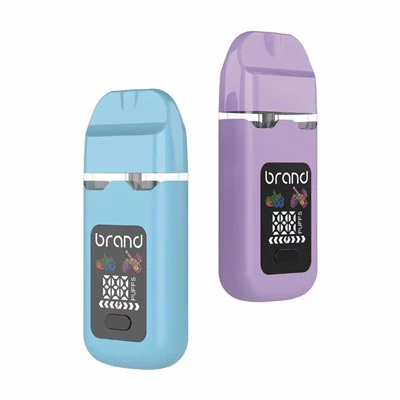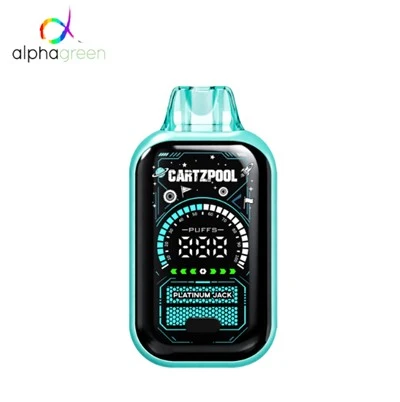
On July 1, 2026, Georgia became the newest medical cannabis vapor market in the United States - and one of the most interesting supply-chain stories in the industry right now.
Senate Bill 220, the "Putting Georgia's Patients First Act," took effect that day. For the first time in state history, registered patients may legally vaporize medical cannabis. Until this summer, that sentence could not be written: for over a decade, Georgia's program allowed only oils, tinctures, capsules, lozenges, patches, and topicals - no vaporization, no flower, and a 5% THC potency cap that kept effective doses out of reach for many patients.
Now an entire vapor category - devices, cartridges, packaging, testing, labeling - has to be built in a state that has never had one. For hardware suppliers, that is the whole story: a new market is being architected from zero, and the key decisions are being made right now.
What SB 220 Actually Changed
| Before July 1, 2026 | Now | |
|---|---|---|
| Program name | Low THC Oil Registry | Medical Cannabis Patient Registry |
| Potency | 5% THC cap (CBD content ≥ THC) | No percentage cap at all |
| Possession limit | Volume-based (20 fl oz) | 12,000 mg total THC, no single package over 1,200 mg |
| Legal products | Oils, tinctures, capsules, patches, lotions | Adds ingestibles and vaporizer products - concentrate/extract devices and flower intended for vaporization |
| Vaporization | Prohibited | Legal for registered patients 21+, private settings only |
| Access points | Licensed dispensaries | Dispensaries plus independent pharmacies |
| Card validity | Shorter cycle | Five years |
A few clarifications that matter:
Georgia no longer sets any THC percentage limit. Some coverage has described SB 220 as raising the cap to "around 50%." That's a misreading - the law replaced percentage limits with milligram-based possession limits. The ceiling is counted across a patient's entire supply at once, not per purchase or per product.
Lupus was added as a qualifying condition (18 conditions now qualify, from cancer and ALS to PTSD and intractable pain). More consequentially, SB 220 removed the "severe or end-stage" requirement from most existing conditions. For years, patients with cancer, multiple sclerosis, Parkinson's, or Alzheimer's qualified only once the disease had progressed to an advanced stage. Now eligibility attaches to the diagnosis itself - a structural expansion of the patient base, not a marginal one.
What did NOT change: smoking and combustion remain illegal for everyone; public use (including public vaping) is unlawful; home cultivation has never been allowed; and conventional edibles like candies and cookies are still off the menu.
Why Vaporization Is the Headline
The clinical logic behind the law is fast onset. As Trulieve's director of Georgia state operations, Jeremy Davis, told local press: the legacy low-dose oils took 30 to 90 minutes to take effect, while vaporized products can work in 5 to 10 minutes. For patients managing seizures, chronic pain, or PTSD episodes, that difference is not a convenience - it's the entire point.
State Sen. Matt Brass, the Newnan Republican who sponsored SB 220, told the Georgia Recorder in September that the law is "very clear": vaporizing flower and vape oil are the only legal ways to inhale medical cannabis in Georgia.
Read that sentence again from a hardware perspective. Georgia regulators didn't merely tolerate vaping - they wrote the device category directly into law, while explicitly banning combustion. In this market, the vaporizer is not an accessory to the program; it is the program's only inhalation pathway. And note the scope: legal vaporizer products include both concentrate/extract devices and flower for vaporization - meaning two distinct hardware categories (cartridge/device systems and dry-herb vaporizers) are in play.
Read the Numbers: A Small Market Compounding Fast
Nearly 50,000 registered patients as of September 2, 2026, according to the Georgia Department of Public Health.
Certifications are up 57% since January 1, per Trulieve - growth that predates and then accelerated through the law's effective date.
The retail footprint is scaling: Trulieve alone now operates seven Georgia dispensaries (its seventh opened in the Atlanta metro area on September 10), alongside other licensees and a pharmacy channel that lets independent pharmacies dispense medical cannabis - a distribution model very few states use.
The runway is long. Georgia is a state of more than 11 million people with one of the lowest medical-cannabis adoption rates of any U.S. program. Its first legal in-state sale only happened on April 28, 2023 - eight years and twelve days after the 2015 Haleigh's Hope Act first made low-THC oil legal to possess but, infamously, provided no legal way to buy it. Everything about this program is early.
Small base, steep curve, huge headroom, and a patient population that just got a reason to prefer inhalation over the only formats they've ever been offered.
The Date That Shapes Everything: January 1, 2027
Here is the most operationally important fact in this market: testing, labeling, and ingestion standards for the newly permitted product types are due by January 1, 2027. Product availability is arriving in stages, not all at once - the law took effect in July, shelves are filling through the fall, and the compliance framework for the new categories is still being finalized.
For anyone supplying this market, that timeline defines the window. Georgia's licensed producers are making hardware, packaging, and SKU decisions now, ahead of the January standards date, so they can hit the ground running when the rules are set. The demand curve here is back-loaded into 2027 - but procurement decisions are front-loaded into 2026.
Building a Vapor Supply Chain From Zero
Georgia's existing production base was built for tinctures, capsules, and topicals. Vaporization is a genuinely new category for every licensee in the state, and the law's architecture tells you exactly what the products need to look like:
Milligram-based SKU math. The 1,200 mg-per-package ceiling is the binding design constraint. A standard one-gram cartridge at typical distillate potency lands in the high-800s in total THC - comfortably under the ceiling, but with little headroom for bundling or ultra-potent extracts in a single package. And at 12,000 mg total possession, a patient can hold up to ten maximum-strength packages at once. Package architecture, label transparency, and mg-per-unit presentation aren't marketing choices here - they're compliance requirements that shape the BOM.
Pharmacy-shelf presentation. With independent pharmacies dispensing alongside dispensaries, products must meet pharmaceutical expectations: manufacturer-labeled containers, child-resistant packaging, batch traceability, and label accuracy that survives a pharmacist's scrutiny. This is a medical channel in the most literal sense.
A compliance-first device culture. 21+ verification, private-use-only rules, no combustion, no public use. Georgia is a conservative medical-only state that chose vaporization deliberately. The producers who win here will be the ones whose hardware partners treat compliance as a product feature - not a retrofit.
The template effect. Georgia is what a 21st-century medical-only market looks like when it adds vaporization: milligram limits, pharmacy distribution, phased standards, and patients counting minutes to onset. Other conservative medical-only states are watching. Every one that follows this template is a new demand map for the hardware supply chain.
The Takeaway
New vapor markets don't open all at once. They open as law first, shelves second, standards third - and the window between those stages is when the industry's supply relationships get locked in.
In Georgia, that window is open right now: the law went live July 1, shelves are filling through the fall, and the January 1, 2027 standards date is the finish line every licensed producer is building toward. A brand-new medical vapor market in a state of 11 million, with 50,000 patients already registered and certifications up 57% this year, is building its entire device supply chain from zero.
The question for hardware suppliers isn't whether this market matters. It's whether your catalog, your compliance documentation, and your lead times will be ready before the window closes.
Sources
Georgia Department of Public Health / Georgia Recorder - patient registration figure (Sept 2, 2026), via Dunwoody-Brookhaven Ledger reporting (Sept 25, 2026)
SB 220 "Putting Georgia's Patients First Act" provisions, effective July 1, 2026 - MMJ Health (Georgia clinic network) and CBD Advisor program summaries; Fine Fettle (Georgia dispensary) patient guide
Trulieve Georgia expansion and Jeremy Davis / Sen. Matt Brass remarks - Dunwoody-Brookhaven Ledger, Sept 25, 2026 (citing Patch and the Georgia Recorder, Sept 8, 2026)
Georgia program history (Haleigh's Hope Act, HB 324, first sales April 28, 2023) - Wikipedia "Cannabis in Georgia (U.S. state)"; Peach State Cannabis program archive
Testing/labeling/ingestion standards deadline (Jan 1, 2027) - MMJ Health program analysis
*This article is industry commentary based on public sources, not legal advice. Figures should be re-verified against the Georgia Access to Medical Cannabis Commission (GMCC) and Georgia DPH before commercial use.