Introduction
The evolution of vaping products in the United States made significant and innovative leaps forward with the emerging legalization of cannabis and the advent of discreet vaping. Brief histories of cannabis and electronic cigarettes (e-cigarettes) will be introduced, along with the merging of those industries. This review of cannabis, e-cigarette/vaping products, and associated concerns will discuss vaping devices, product forms, chemical constituents, health and safety issues, and the challenges of state regulations and quality assurance of products.
Cannabis sativa is a complex, annual, herbaceous plant containing more than 560 compounds belonging to multiple chemical classes, including cannabinoids, terpenes, and sugars. More than 120 known phytocannabinoids, or naturally occurring cannabinoids, are synthesized by the plant, with Δ9-tetrahydrocannabinol (Δ9-THC) recognized as the major psychoactive compound (ElSohly et al., 2021, ElSohly and Slade, 2005, Fischedick et al., 2010). Cannabidiol (CBD) is another predominant phytocannabinoid, depending on plant genetics. Natural minor cannabinoids include cannabinol (CBN), cannabigerol (CBG), cannabichromene (CBC), cannabidivarin (CBDV), Δ8-tetrahydrocannabinol (Δ8-THC), Δ10-tetrahydrocannabinol (Δ10-THC), and hexahydrocannabinol (HHC). Depending on the chemotype of the plant and growing conditions, not all minor cannabinoids will exist in every plant. When they are present, they are typically in trace concentrations. Δ9-tetrahydrocannabinolic acid (Δ9-THCA) and cannabidiolic acid (CBDA) are the respective chemical precursors to Δ9-THC and CBD, which are found in plants in varying concentrations and convert to the pharmacologically active form via decarboxylation.
Terpenes, aka terpenoids or terps, encompass a broad class of chemicals found in many plants, but are often associated with cannabis. Plants produce these compounds for protection from predators or to encourage pollination (Cannabis Industry Gets Crafty with Terpenes, n.d.). Individual terpenes have distinct aromatic and flavorant properties and are used for various therapeutic properties. Different strains of cannabis have been cultivated to produce varying amounts of different terpenes to achieve different and desired sensory experiences. Terpenes may be added to manufactured products either to achieve a desired aroma or taste, or for marketing of therapeutic uses.
Archaeobotanical evidence of domesticated 10,000 year old cannabis was recovered in Southeast Asia (Pisanti and Bifulco, 2019, Warf, 2014). Use of cannabis evolved from the manufacturing of textile products to consuming it for its medical and psychoactive properties, as described by the Chinese emperor Shen Nung in approximately 2700 BCE; in the Egyptian Ebers papyrus in 1500 BCE; and by Herodotus in 440 BCE. The discovery of carbonized cannabis seeds in graves dating to 2800–2500 BCE (Jiang et al., 2007, Ren et al., 2019) galvanized the literary references of ancient peoples burning cannabis for its psychoactive properties. The discovery of the psychoactive effects of the plant has been reported to motivate the cultivation of the plant (Andre et al., 2016, Crocq, 2020, Russo et al., 2008).
In the United States, cannabis has a complicated cultural, regulatory, and legislative history. It has been reported that "American laws never effectively recognized a difference between hemp and marijuana, that is cannabis sativa L and cannabis sativa" (Warf, 2014). In 1607, Captain Christopher Newport observed native Americans cultivating "hempe" (sic) for use as a textile as well as for religious and medicinal purposes in Powhatan Village, present day Richmond, Virginia (Archer, 1860). An editorial in the New York Times, dating January 10, 1854, mentioned hemp as one of the "fashionable narcotics" while opining on the denouncements of their use ("Our Fashionable Narcotics.," 1854), likely emanating from the national conversation on regulation and legislation. Hemp and hash use proliferated in the late 1800s, and by 1906, the United States Congress passed the Pure Food and Drug Act, the predecessor to the Food and Drug Administration (FDA) (Bridgeman and Abazia, 2017, Mead, 2019). This act made it "unlawful for any person to manufacture…any article of food or drug which is adulterated or misbranded", thereby requiring that all food and drug, recognized by the United States Pharmacopoeia (USP), be properly labeled as to their ingredients (Bridgeman and Abazia, 2017, Department of State, 1789). The USP described cannabis as early as 1850 but dropped it from regulatory oversight in 1942. In July 2019, the USP issued a letter stating "we have learned of the critical and growing need for scientific articulation for quality attributes for cannabis and related products to help protect patients and consumers from harm" (Venema, 2019) and subsequently published its considerations for quality attributes in 2020 (Sarma et al., 2020).
The Marihuana Tax Act of 1937, considered an action steeped in racism, federally restricted the use and sale of cannabis by imposing taxes, and, in 1969, the United States Supreme Court declared the act unconstitutional (Musto, 1972, Timothy Leary v United States, 1969). Congress repealed the Tax Act, instituted the Controlled Substances Act (CSA) of 1970, and placed cannabis in Schedule 1 in 1972 (Mead, 2019, Sacco, 2014). Schedule 1 substances are the most strictly controlled substance group, and are defined as not having any currently accepted medical use and a high potential for abuse (Mead, 2019). In 2017, synthetically produced Δ9-THC was placed on Schedule II of the CSA, but this delineation was only for synthetic Δ9-THC used in FDA-approved products (82 FR 55504 - Schedules of Controlled Substances, 2017). In 2018, Cannabis sativa L. was delineated as either cannabis or hemp by the United States Department of Agriculture (USDA), depending on the Δ9-THC concentration, as a result of the Agriculture Improvement Act of 2018 (often referred to as the 2018 Farm Bill). The Act defined marijuana as having a Δ9-THC concentration greater than 0.3% of the dry weight of the plant, and anything below that threshold is considered hemp (Establishment of a Domestic Hemp Production Program, 2021). The 0.3% concentration was potentially derived from a study published in 1976 in which the scientists adopted a concentration of 0.3% Δ9-THC, as measured in upper, younger leaves, to differentiate between wild (used as fibrous hemp, considered to have limited intoxicant abilities) and cultivated (used for its psychoactive effects) C. sativa (Small & Cronquist, 1976). However, the 0.3% threshold is oftentimes criticized as being irrelevant, and other reports define chemotypes of Cannabis as the "drug type" when plants have > 1% Δ9-THC (Brenneisen and Kessler, 1987, Industrial hemp is not marijuana, 1998). Δ9-THC concentration throughout the plant can vary significantly and modern cultivated hemp grown for CBD can naturally contain higher Δ9-THC concentrations (Namdar et al., 2018). Improved agricultural practices enable the plant to produce more cannabinoids, including Δ9-THC (Lydon et al., 1987, Rodriguez-Morrison et al., 2021). Analytical protocols may also have varying measurements of uncertainty, which make ascribing a 0.3% cut-off difficult to assess. The measured concentration of Δ9-THC may straddle the cut-off, making the marijuana or hemp attribution difficult.
Versions of e-cigarettes have potentially existed since the late 1800s. Ads in Harper's Weekly in 1887 touted "electric cigarettes" that light without matches ([advertisement], n.d.). The first patented device in 1930 was not expressly intended for the consumption of nicotine, but for medicinal compounds to be handled without being burned (Joseph, 1930). Herbert Gilbert invented an e-cigarette, patented in 1963, for "replacing tobacco and paper with heated, moist, flavored air" via an undescribed "harmless, flavored chemical compound" (Gilbert, 1965). E-cigarettes known as "heat not burn" devices containing tobacco were developed by tobacco companies in the 1960s, but were not widely adopted and subsequently de-commissioned as commercially unsuccessful (Bialous and Glantz, 2018, Caputi, 2017, Hilts, 1994). Norman Jacobson, credited with the first use of the term "vaping", referred to an e-cigarette device for smoking cessation purposes in 1980 and stated "this does not represent a safe cigarette" (Fake Cigarette Developed, 1980, Smokeless cigs: "they satisfy.", 1980). Pharmaceutical research in the late 1990s resulted in an aerosol generator using propylene glycol as the carrier for drugs (Hindle et al., 1998, Shen et al., 2004).
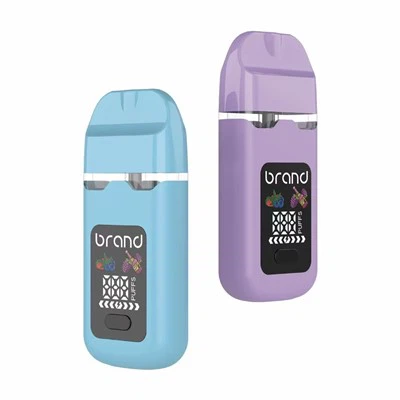
The modern e-cigarette, invented by Hon Lik in 2003, was imported into the United States in 2006 and demonstrated remarkable commercial success (M85579: The Tariff Classification of a Nicotine Inhaler and Parts from China, 2006). By 2018, an estimated 8.1 million adults in the United States used e-cigarettes (Creamer et al., 2019), and by 2019 more than 25% of 12th grade students reported vaping in the previous 30 days (Miech et al., 2019). This modern e-cigarette evolved into four distinct generations as defined by the United States Centers for Disease Control and Prevention (CDC) (E-Cigarette, or Vaping, Products Visual Dictionary, n.d.). First generation e-cigarettes, called "cigalikes", physically resemble combustion cigarettes and are typically disposable. While the second generation evolved to reusable, refillable devices, the third generation, or "mods", enabled users to also change the temperature, power, and wick and coil configurations. The first three generations of e-cigarettes became progressively larger as they became more complicated (E-Cigarette, or Vaping, Products Visual Dictionary, 2020, Poklis et al., 2017, Williams and Talbot, 2019). The fourth generation, "pod mods", reversed course to become simple, compact, and discreet. The disposable "pods" filled with e-cigarette liquid (e-liquid) are not impervious to modification; many are easy to open, allowing users to refill or modify them with other e-liquids, pharmacologically active substances, and/or other additives (E-Cigarette, or Vaping, Products Visual Dictionary, 2020, Fadus et al., 2019, Spindle and Eissenberg, 2018). E-cigarettes are used primarily to consume nicotine but have evolved as a device to discreetly consume other drugs (Breitbarth et al., 2018, Holt et al., 2021, Holt, 2021, Peace et al., 2017, Poklis et al., 2017, The Unexpected Identification of the Cannabimimetic, 5F-ADB, and Dextromethorphan in Commercially Available Cannabidiol E-liquids, 2020).
Modern e-cigarettes generate a condensation aerosol to deliver pharmacologically active substances, flavorants, and any other chemical constituents in the e-liquid to the user. Other chemical constituents include carriers or humectants, solvents, preservatives, additives, and degradation products (Holt, Poklis, & Peace, 2021). A coil inside of the device is heated to temperatures ranging from 170-1000 °C (Mulder et al., 2020) by either depressing a button or drawing on the device via inhalation to create negative pressure, both of which activate the battery. The coil is either embedded in or entwined with a wick saturated with an e-liquid. When heated, the e-liquid evaporates and quickly condenses into an aerosol as it contacts the atmosphere. Vaping is a common slang term for inhaling this type of aerosol. Other terms include "cloud chasing", "vapo", and "vaporisin". Vaping cannabinoids is also known as "dabbin", "ride the mist", "skitzin", "vapindaganja", "cold boxing", "tankinista", "tootle puffer", "vooping", and "vaples" (Slang for "Vaping Thc" (Related Terms) - Urban Thesaurus, n.d.).
Aerosolizing or vaping cannabinoids has been described as beginning with tabletop devices called "volcanoes" or "dab rigs" (Gieringer, 2001, Hazekamp et al., 2006, Loflin and Earleywine, 2014); however, these bulky and cumbersome devices are neither convenient nor discreet. Grenco Science, Inc. and PAX Labs launched Δ9-THC-based e-cigarettes to provide consumers a convenient and discreet delivery system for Δ9-THC (A Brief History of Weed Vapes, 2021, Bobrow, 2021, Freedman, 2014). The launch of these products coincided with the legalization of adult-use cannabis in Colorado and Washington in 2012 (Cannabis Overview, n.d.). The founder of Grenco Science, Inc. reportedly developed an e-cigarette optimized for Δ9-THC concentrates and e-liquids after not experiencing Δ9-THC-induced euphoria when he vaped a formulation containing Δ9-THC. He attributed the absence of the high to design limitations of e-cigarettes at that time (A Brief History of Weed Vapes, 2021, Bobrow, 2021). The founders of Ploom developed an e-cigarette in 2005 as graduate students and launched the company in 2007 with a heat-not-burn device which could aerosolize nicotine directly from tobacco instead of an e-liquid. In 2011, Ploom partnered with Japan Tobacco International and launched PAX, an e-cigarette optimized for the delivery of Δ9-THC from plant material (Freedman, 2014, Innovative-partnership-for-ploom-and-japan-tobacco-international.pdf, 2021, Straight, 2018).. Shortly thereafter, JUUL was released by the PAX inventors as a nicotine e-cigarette (L. Etter, 2021). The Grenco Science, PAX, and JUUL devices were developed as discreet delivery devices for Δ9-THC and nicotine (A Brief History of Weed Vapes, n.d.; Bobrow, n.d.; Freedman, 2014).
The percentage of vaping posts mentioning Δ9-THC, CBD, or synthetic cannabinoids increased from 14.5% to 24.6% from 2015 to 2019, demonstrating cannabis vaping's rising popularity (Sumner et al., 2021), with the odds of vaping cannabis 3.7 times higher for those that use e-cigarettes versus non-e-cigarette users (Tai et al., 2021). Cannabis vaping is correlated with younger age, higher education, and higher frequency of use (Cranford et al., 2016). Young adults who use cannabis are reported to prefer vaping because of its convenience and discreetness, but do not abandon smoking cannabis (Cranford et al., 2016, Jones et al., 2016). In a 2018–2019 study, frequent vaping of cannabis increased significantly among high school students (+131%), and generally increased in females (+183%), those who go out 4–7 nights per week (+163%), and those who take prescription opioids recreationally (+184%) (Palamar, 2021). Of adolescents (12–17 years old) admitted into a facility to treat substance use disorder, 50% reported currently vaping nicotine, 51% reported currently vaping cannabis, and 40% reported currently vaping both (Young-Wolff et al., 2021). These patients were significantly more likely to live in households with higher incomes and be non-Hispanic white (Young-Wolff et al., 2021). A survey of adolescents demonstrated that use of e-cigarettes in a 30 day period was associated with a higher prevalence (adjusted odds ratio of 3.18 times more likely) of vaping cannabis (Kowitt et al., 2019), while smoking a traditional cigarette had no significant association with vaping cannabis (Boccio and Jackson, 2021, Kowitt et al., 2019). This trend is supported by another study reporting single-substance use among adolescent and young adults was not as common as poly-product (tobacco and cannabis) use (Lanza et al., 2021). Some speculate that cannabis use associated with e-cigarette use may foil progress in tobacco control (Weinberger et al., 2021).
The prevalence of cannabis use increased in the 50–64 age group in a legal adult-use state between 2014–2016, reported as the prevalence of "no cannabis use in the past 12 months" in one study. Women demonstrated an 84.2% rate of "no cannabis use" in 2014, which dropped to 76.1% in 2016. The male rate of "no cannabis use" dropped from 76.8% to 62.4% from 2014 to 2016. This study also reported vaping cannabis was associated strongly with regular and daily use (Subbaraman & Kerr, 2021). In a separate study, vaping cannabis among adults was described as increasing from 10% to 13.4% between 2017 to 2019 and demonstrated higher odds associated with heavy alcohol use (consuming > 14 or > 7 drinks per week for men or women, respectively); binge drinking (consuming > 5 or > 4 drinks on a single occasion for men or women, respectively); and high-risk behaviors (intravenous drug use, treatment for sexually transmitted infections, and exchanging money/drugs for sex) (Boakye et al., 2021).
The advent of discreet vaping products has impacted cannabis use demographics. Cannabis vaping juxtaposed with nicotine vaping show demographic profiles are similar. As previously mentioned, cannabis vaping is correlated with younger age, higher education, and higher income. National surveys indicate nicotine vaping is highest in young adults with some college/an associate degree (Cornelius et al., 2020, Key Substance Use and Mental Health Indicators in the United States: Results from the, 2020). Poly-substance use is not uncommon, and surveys have reported that use of a nicotine-based e-cigarette leads to increased odds of vaping cannabis (Kowitt et al., 2019).
Section snippets
Devices
Devices for vaping cannabis are available in every generation of e-cigarette to accommodate the variety of products containing cannabinoids. A popular style is the disposable "cart", short for cartridge and a version of 4th generation pod mods. These carts, which snap or screw into an existing device, were devised to facilitate discreet drug usage. The rise of discreet use devices facilitated the development of products that look like common items such as ink pens, cup holders, and smart
Summary and conclusions
In the early 1900s in the United States, regulations were established to safeguard against adulterations of products and misbranded drugs. At the time, cannabis was included under these requirements. Presently, cannabis remains a Schedule I drug under the Controlled Substances Act and is regulated only in individual states with legalized cannabis programs. In the absence of unified, universal oversight, the quality of cannabis-based vaping products varies nationwide. Adulterations and
Funding
This work was supported by the National Institute of Justice [2018-75-CX-0036, 2019-MU-MU-007] and National Institute of Health: National Institute on Drug Abuse [P30 DA033934]. The opinions, findings, and conclusions or recommendations expressed in this publication are those of the author(s) and do not necessarily reflect those of the Department of Justice.
Conflict of Interest
None.
Acknowledgements
This manuscript was written on behalf of and edited by the Alcohol, Drugs, and Impairment Division of the National Safety Council.