
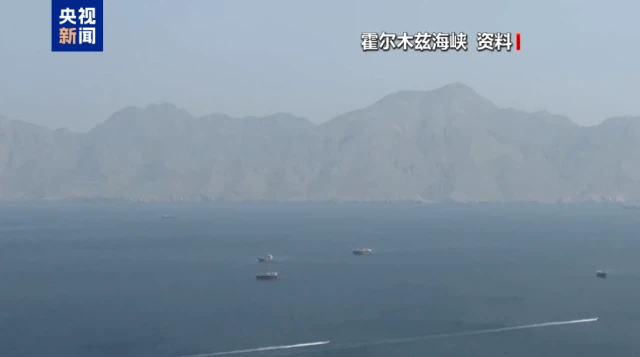
The ongoing conflict in the Middle East has effectively halted vessel movements through the Strait of Hormuz since late February, severing access between Persian Gulf ports and the global container network, according to the Baltic and International Maritime Council (BIMCO).
Niels Rasmussen, chief shipping analyst at BIMCO, said around 130 container vessels-representing roughly 1.5% of global fleet capacity-are currently stranded in the Gulf. The war has introduced fresh uncertainty into an outlook that was already clouded by shifting US tariff policies.
With transit through the Strait of Hormuz at a standstill, approximately 3% of global container volumes are unable to move, directly affecting an estimated 5% of global vessel demand. Because many ships calling at Gulf ports also serve destinations such as Pakistan and India, the broader disruption is believed to impact nearly 10% of the world's fleet.
The conflict adds to instability stemming from US trade measures. The US Supreme Court has ruled that most tariffs imposed throughout 2025 and early 2026 were unlawful, requiring refunds of fees collected. In response, a new 15% across-the-board tariff has been introduced, set to expire after 150 days unless extended by Congress.
Given the unpredictable timeline for reopening the Strait of Hormuz, BIMCO has outlined two scenarios. The first assumes the waterway remains effectively closed for an extended period, while the second anticipates a near-term resumption of transits.
Rasmussen noted that aside from the vessels currently trapped in the Gulf, ship supply growth remains largely unaffected by the closure, though demand is projected to fall by 5% in 2026. He added that ships no longer serving Gulf routes are more likely to be idled, laid up, or held in reserve rather than redeployed to other trade lanes. As a result, while the global supply‑demand balance may appear significantly weaker, the spillover effect on other routes could be limited.
The conflict has also heightened risk perceptions for Red Sea transits due to links between Iran and the Houthis. Initial efforts to resume regular Suez Canal routings have been reversed, and a full normalization of shipping routes now appears further delayed.
Even if the Strait of Hormuz reopens soon, significant uncertainty will remain. BIMCO's ship demand forecast for 2026 therefore includes a two‑percentage‑point range. The organization also presents minimum and maximum projections for fleet supply growth, with the lower end factoring in a gradual decline in average sailing speeds toward levels seen in 2023.
"Regardless of whether the Strait remains effectively closed or not, we expect a modest softening of the global supply‑demand balance in 2026 and 2027," Rasmussen said. "But if transits do not resume, liner operators will face substantial additional costs from higher oil prices, alongside a reduction in cargo volumes."